
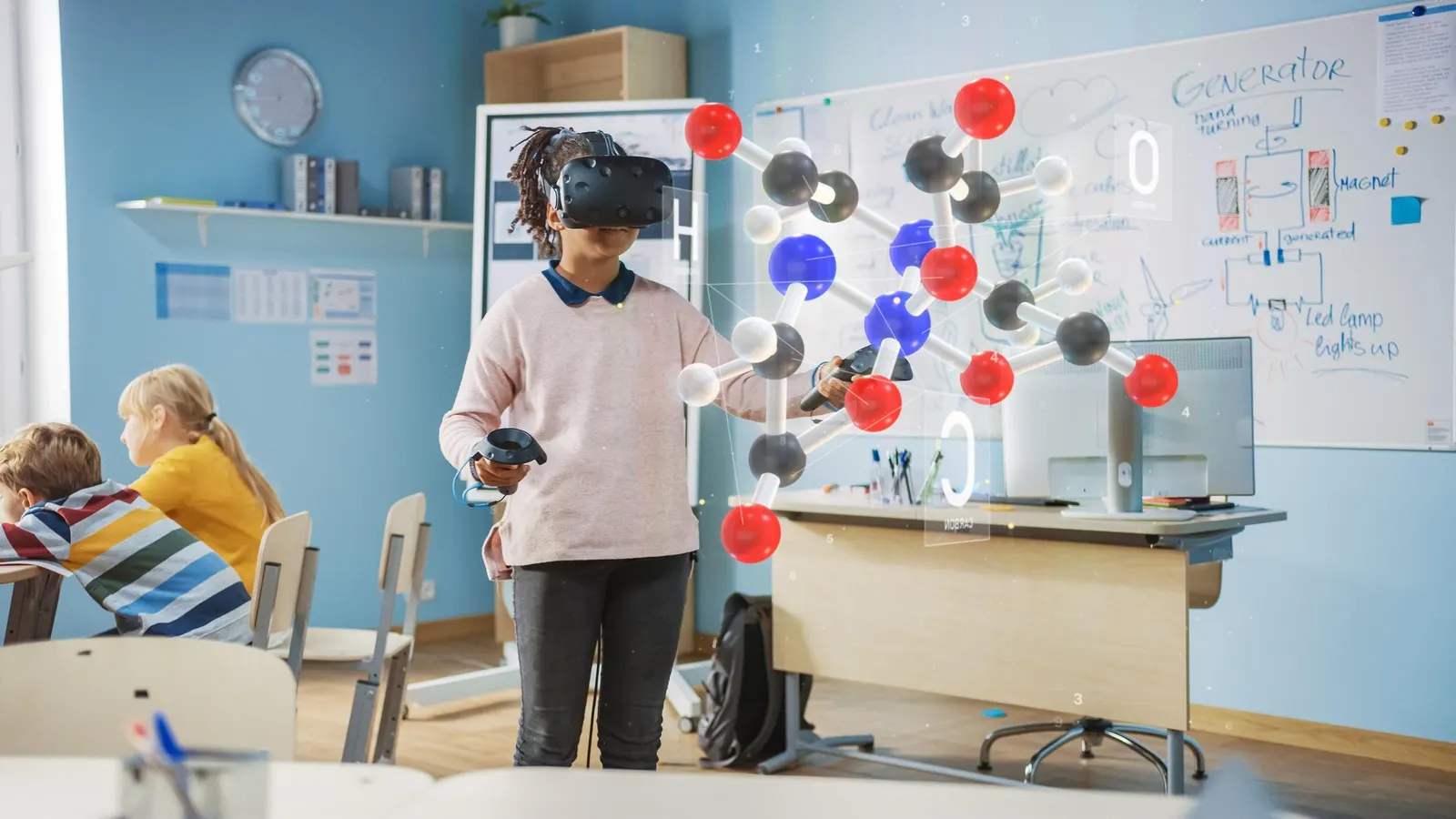
The landscape of education is evolving at a rapid pace. Traditional classrooms, with rows of desks and textbooks, are gradually giving way to virtual reality (VR) classrooms, where students can learn through immersive, interactive experiences. VR technology promises not only to make learning more engaging but also to expand access to education globally, breaking barriers of geography and resources.
As schools and universities explore digital learning platforms, VR classrooms are emerging as the next frontier in education. Interestingly, even industries seemingly unrelated to academics, such as online entertainment platforms like Togelslot88, are indirectly influencing the adoption of gamification and interactive digital environments, providing lessons for VR learning design.
What Are VR Classrooms?
Virtual reality classrooms are simulated environments where students and teachers interact in 3D spaces. Using VR headsets and motion-tracking devices, learners can explore historical sites, conduct virtual science experiments, or collaborate on complex projects as if they were physically present.
Unlike video lectures or online slideshows, VR classrooms allow students to experience learning rather than passively consume information. For example:
-
Science students can manipulate molecules and perform lab experiments safely in VR.
-
History learners can walk through ancient civilizations and historical events firsthand.
-
Art and design students can experiment with 3D modeling and virtual galleries.
The interactivity makes learning more engaging, boosts retention, and fosters creativity.
Benefits of VR Classrooms
1. Immersive Learning Experiences
VR classrooms provide a sense of presence that traditional online learning cannot match. Students feel like they are inside the lesson, which enhances understanding and memory retention.
2. Accessibility for All
VR technology can democratize education. Students in remote or underserved areas can access the same quality resources as those in urban centers. While platforms like Togelslot88 thrive in the digital entertainment sector, their user engagement strategies offer insights into designing VR content that keeps users—students—fully engaged.
3. Safe Learning Environments
Virtual labs and simulations allow learners to experiment without risk. This is particularly important in fields like chemistry, engineering, or medical training, where mistakes in the real world could be costly or dangerous.
4. Personalized Education
AI-driven VR systems can adapt lessons to individual learning paces, providing targeted support and feedback. Students can revisit lessons, practice skills repeatedly, and explore topics in depth without pressure.
Gamification and VR: Lessons from Platforms Like Togelslot88
Interestingly, concepts from online gaming platforms, including sites like Togelslot88, are influencing VR education design. Gamification strategies—such as rewards, progress tracking, and interactive challenges—can enhance motivation and engagement in VR classrooms.
For instance, just as Togelslot88 provides engaging user experiences with slot games, VR classrooms can incorporate interactive simulations, leaderboards, and achievement badges to encourage participation. Integrating game mechanics into learning makes education feel more like an adventure than a chore.
Challenges in Implementing VR Education
While the potential is enormous, implementing VR classrooms comes with challenges:
-
Cost of Equipment – High-quality VR headsets and supporting hardware are expensive. Schools and students may struggle to access them universally.
-
Technical Limitations – VR requires stable internet connections, powerful computers, and compatible software.
-
Teacher Training – Educators must learn how to design and facilitate VR lessons effectively.
-
Health Concerns – Prolonged VR use may cause eye strain or motion sickness in some learners.
Despite these challenges, ongoing technological improvements are gradually making VR more affordable, accessible, and user-friendly.
The Future of VR in Education
By 2025 and beyond, VR classrooms are expected to become more mainstream. Potential developments include:
-
Hybrid Learning Models – Combining physical classrooms with VR experiences to enhance understanding and engagement.
-
Global Collaboration – Students from different countries can meet in VR environments, promoting cultural exchange and teamwork.
-
Integration with AI – Smart VR tutors can provide personalized guidance and instant feedback, similar to how AI algorithms optimize user experiences on platforms like Togelslot88.
-
Career-Specific Training – Medical, engineering, and technical fields can benefit from realistic VR simulations for hands-on practice.
The future promises a more interactive, inclusive, and dynamic learning environment where students can explore knowledge in ways never imagined before.
Impact on Society
VR classrooms are more than just technological innovations; they have the potential to reshape society:
-
Closing Education Gaps – Students in remote or underprivileged regions can access the same quality learning resources as those in top-tier schools.
-
Promoting Lifelong Learning – Adults can continue learning new skills in immersive VR environments, encouraging continuous personal development.
-
Enhancing Engagement – VR fosters collaboration, critical thinking, and creativity, preparing students for modern workplaces.
Even platforms like Togelslot88, while focused on entertainment, exemplify how digital interactivity can captivate audiences—a principle that VR educators are adapting to make learning more engaging.
The future of education is immersive, interactive, and inclusive. VR classrooms represent a paradigm shift, allowing students to learn through experience rather than passive observation. By integrating gamification, AI personalization, and global collaboration, VR education promises to transform the way knowledge is acquired.
While challenges such as cost and accessibility remain, the trajectory is clear: VR classrooms will redefine learning in the 2020s. Furthermore, lessons from digital engagement platforms like Togelslot88 demonstrate that interactivity and user-centered design are key to keeping learners motivated and engaged.
In the coming years, education will not just be about what students know—but about what they experience, explore, and create in virtual environments. The classroom of the future is no longer confined by walls; it exists wherever students and technology meet.
Read Also: Membangun Masa Depan Sekolah dengan Inovasi Pendidikan
0 Comments